Blog

  • Practical Implications of the Supreme Court’s Decision in BTI v Sequana SA

    Practical Implications of the Supreme Court’s Decision in BTI v Sequana SA

    The Supreme Court has handed down its long-awaited judgment, which as Lord Reed noted, considered issues that go to the heart of our understanding of company law and are of considerable practical importance to the management of companies.

    Background to the Appeal

    In May 2009, the directors of a company called AWA caused it to distribute a dividend of €135 million to its only shareholder, Sequana SA (“Sequana”) extinguishing almost the whole of a larger debt Sequana owed to AWA. The dividend complied with the statutory scheme regulating the payment of dividends and with the common law rules. At the time the dividend was paid, AWA was solvent, however, it had a long-term contingent liability of an uncertain amount, which gave rise to a real risk, albeit not a probability, that AWA would become insolvent at an uncertain date in the future.

    This risk materialised ten years later, and AWA went into insolvent administration. The appellant, AWA’s assignee BTI 2014 LLC (“BTI”) sought to recover the dividend amount from AWA’s directors. BTI argued that the payment of the divided was in breach of their fiduciary duties because the directors had not considered or acted in the interests of AWA’s creditors. Both the High Court and Court of Appeal rejected the creditor duty claim. In the judgment of the Court of Appeal, it was held that the creditor duty did not arise until a company was actually insolvent, on the brink of insolvency, or probably headed for insolvency. BTI appealed to the Supreme Court.

    The Supreme Court’s Decision

    The judgment of the Supreme Court unanimously dismissing the appeal consists of four separate judgments, which consider at length the existence, content and engagement of the so-called “creditor duty”. Although the reasoning in each of the judgments vary, we have detailed below what can be considered as the key takeaways:

    • A creditor duty is owed by the directors of a company. The Supreme Court held that the creditor duty should be affirmed due to its existence being preserved by section 172(3) of the Companies Act (imposing a director’s duty to, in certain circumstances, consider or act in the interests of company creditors) and a long line of UK case law.
    • The interests of creditors are the interest of the company’s creditors as a whole. Once the creditor duty is engaged, directors should consider the interests of creditors whilst balancing them against the interests of shareholders where they conflict. However, where an insolvent liquidation or administration is inevitable, the creditors’ interests become paramount as the shareholders cease to retain any valuable interest in the company.
    • As to when the creditor duty will be triggered, the majority held that the creditor duty is engaged when the directors know, or ought to know, that the company is insolvent or bordering on insolvency, or that an insolvent liquidation is probable.
    • The creditor duty can apply to a decision by directors to pay a dividend which is otherwise lawful.

    The Practical Implications

    The Supreme Court has provided clarification that the creditor duty exists, however, the exact point at which this duty will be triggered is not as clear. Although the Supreme Court has held that the creditor duty is not triggered by a mere risk of insolvency which is neither probable or imminent, the exact point at which a real risk of insolvency becomes a probable one is unclear.

    The Supreme Court appears to have preferred a ‘sliding-scale’, with the priority given to the creditors’ interests increasing as the company’s financial difficulties become more serious until the point at which insolvency is inevitable meaning that the creditors’ interests become paramount. Whilst it is true that many companies who experience financial difficulties slowly slide into insolvency, this nuanced approach is difficult to apply in practice.

    Directors are therefore encouraged to take a cautious approach to the duties they owe to creditors particularly when considering the point at which the creditor duty is triggered.

  • Restrictive Covenants: How Far Can a Franchise Owner Go?

    Restrictive Covenants: How Far Can a Franchise Owner Go?

    Franchising is an industry that is expanding in popularity, particularly within the UK where the number of franchised businesses has substantially increased. Given the competitiveness within the industry, many franchisors seek to impose what are known as restrictive covenants on their franchisees.

    What are restrictive covenants and are they enforceable?

    Restrictive covenants are contractual conditions that restrict, limit, prohibit, or prevent the way in which one party can act.

    Restrictive covenants are common in franchise agreements and usually take the form of restricting and preventing a franchisee from operating a competing business after the franchise agreement comes to an end.

    The question is the extent to which they are enforceable. The Court’s approach to restrictive covenants founded in Nordenfelt v Maxim Nordenfelt Guns [1894] AC 535, is that restrictive covenants are enforceable when, with reference to the interest of the parties concerned, the restraint goes no further than is necessary to protect a legitimate interest.

    Recently, the Court of Appeal in Dwyer (UK Franchising) Limited v Fredbar Limited & Shaun Bartlett  [2022] EWCA Civ 889 has expanded on the factors to be considered when determining whether a restraint of trade is reasonable by confirming that inequality of bargaining power is a significant factor in determining reasonableness.

    Bargaining power in the context of restrictive covenants

    A franchisor holds the most power when it comes to negotiating a franchise agreement. Franchise agreements are often prepared in a standard form, which limit a franchisee’s ability to seek amendments to suit their individual needs.

    The Court of Appeal contextualised this as being a total inequality of arms, particularly when there was no evidence of any discussions or negotiations and the franchise agreement had to be accepted or rejected in its standard form.

    In Dwyer the post termination covenant prevented the franchisee from being engaged in a business similar to or in competition with the franchisor’s plumbing and draining business within either (i) the territory for which the franchisee had been granted exclusivity; or (ii) a radius of five miles from that territory.

    The Court of Appeal upheld the High Court’s decisionthat the restraints were unreasonable, making the point that the parties’ background circumstances, and what they objectively contemplated when the contract was made, were relevant considerations when assessing reasonableness. In this case, the franchisor was a major business whereas the franchisee was essentially a “man with a van”.

    As the contract was presented as take it or leave it, the Court of Appeal held that the inequality of the bargaining relationship meant that the contract was akin to an employment relationship rather than a commercial relationship.

    Concluding remarks on Franchise Law

    Given the Court of Appeal’s recent decision it is important for franchisors to take into consideration the bargaining power they hold over the contents of a franchise agreement.
    The courts are now willing and keen to consider the specific circumstances of the parties, including the degree of risk undertaken by a franchisee, which includes the financial impact the failure of a franchise may have when determining whether a restrictive covenant is reasonable.

    How far a franchisor will be compelled to make enquiries into a potential franchisee’s personal financial circumstances is yet to be determined.

    Should you have any queries with regard to this article, please do not hesitate to contact our franchise solicitors  Waleed Tahirkheli and Jenna Krüger. Alternatively, you can contact our offices on +44 (0) 203 972 8469.

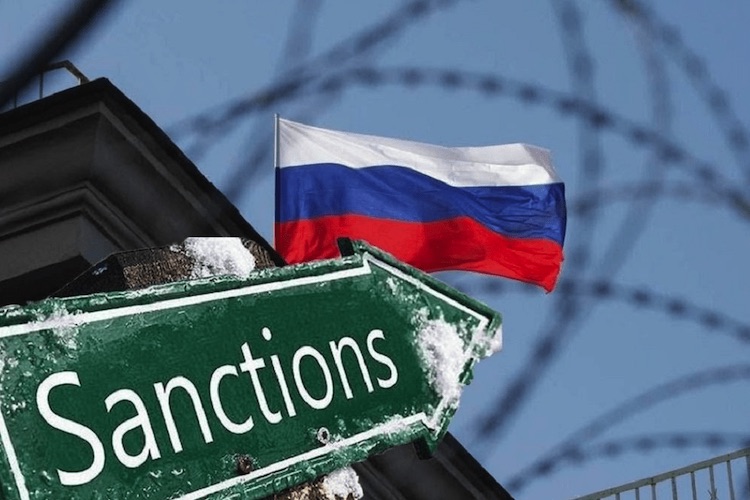
  • Sanctions – Can I Have My Name Removed From A Designated List?

    Sanctions – Can I Have My Name Removed From A Designated List?

    Introduction

    The power of the UK, US, and the EU to freeze assets and prevent funds or assets from being made available or used for the benefit of a sanctioned person, entity, or body should not be underestimated. Since 9/11, the weaponisation of finance through the imposition of sanctions has risen exponentially. Although the focus at present is on the sanctions being imposed on Russian businesses and people, other countries, notably Iran, have been subjected to sanctions aimed at squeezing the state out of the world’s financial system.

    The Obama administration imposed restrictions on Iran’s central bank which put pressure on the country to negotiate the 2015 deal concerning its nuclear programme. In the UK, the Iran (Sanctions) (Nuclear) (EU Exit) Regulations 2019 “provide for the freezing of funds and economic resources of certain persons, entities, or bodies responsible for the proliferation or development of nuclear weapons in, or for use in, Iran.”

    Asset freezing is not restricted to alleged political and human rights violations. It is also used against people, entities, or bodies who are suspected of money laundering or in cases where a UK enforcement agency believes, on the balance of probabilities, there are reasonable grounds to suspect certain assets and/ funds are the proceeds of crime or are intended for use in unlawful conduct. Certain people/groups subject to financial sanctions are also deemed terrorist organisations and face parallel counter-terrorist finance measures.

    In this article, we examine how a designated person can challenge the inclusion of their name on a sanctions list to release their assets and end any other financial prohibitions related to their interests.

    How does an enforcement body freeze assets in the UK and internationally?

    The Sanctions and Anti-Money Laundering Act 2018 (SAMLA) enables the UK government to impose economic and other sanctions as well as pass anti-money laundering regulations.

    If a person, entity, or body has had its assets frozen no one will be able to:

    • Deal with the funds or economic resources belonging to, owned, held, or controlled by the designated person, entity, or body.
    • Provide funds or economic resources, directly or indirectly, to, or for the benefit of, a designated person, entity, or body.
    • Knowingly participate in activities that circumvent the sanctions in order to make funds available to the designated person, entity, or body.

    Financial sanctions may also forbid anyone from providing or performing banking, insurance, and other financial services to a designated person, entity, body, or country.

    It is important to note that asset freezes and financial sanctions can apply not only to designated people but to any entity which is “owned or controlled, directly or indirectly, by a designated person”. Examples of ownership or control may include a designated person holding over 50% of the voting rights in a company or having the power to appoint or remove a majority of the Board.

    What are the penalties for breaching financial sanctions?

    Breaching financial sanctions can be punished by criminal and civil penalties. The Police and Crime Act 2017 provides for a maximum sentence of seven years imprisonment for breaching financial sanctions. The Office for Financial Sanctions Implementation (OFSI) can also impose financial penalties on those who breach sanctions. Financial penalties can range from 50% of the total breach up to £1 million; whichever is the greater value.

    Another penalty which can be imposed on a person, entity, or body that breaches financial sanctions is the issuing of a Serious Crime Prevention Order (SCPO). A SCPO is a civil injunction aimed at preventing serious crime and can include any restriction or requirement that the court sees fit to impose.

    Can inclusion on a sanction designations list be challenged?

    The method of challenging being named a designated person on a sanction list will depend on the source of the sanction list, namely the UN Security Council, the Council of the European Union, or the UK government.

    UN sanctions listing

    Under SAMLA, a person designated under a UN sanctions listing can request that the UK Government seek to have their name removed from the list. If the government refuses, the person may apply for judicial review. If the High Court rules that the government acted unlawfully, the government can be ordered to use its best endeavours to have the person de-listed, however, the court cannot order the listing to be quashed.

    In R (Youssef) v Secretary of State for Foreign, Commonwealth and Development Affairs [2021] EWHC 3188 (Admin) the claimant challenged the continued application of the assets-freezing regime imposed on him by the ISIL (Da’esh) and Al-Qaida (United Nations Sanctions) (EU Exit) Regulations 2019 as being incompatible with the right of access to a court guaranteed by Article 6 of the European Convention on Human Rights (ECHR) and the right to private and family life protected by Article 8 ECHR. The High Court rejected the claimant’s arguments, stating that Article 6 and 8 require that a domestic court can review a UN derived sanctions listing to see if it is haphazard and SALMA provides for this. The ECHR, however, does not demand that a domestic court should be able to quash a UK sanction. Therefore, SALMA was compatible with the ECHR.

    Unfortunately, this decision does indicate a watering down of post-Brexit human rights protections and a strengthening of the UK’s position on sanctions.

    Council of the European Union listing

    There are two ways to challenge a designation at an EU level:

    • The designated person can submit a request to the Council to be removed from the list, or
    • He or she can apply to the General Court to have the decision regarding the act which imposed restrictive measures on them annulled.

    In European Commission v Kadi (Cases C-584/10 P, C-593/10 P and C-595/10 P) ECLI:EU:C:2013:518 (Kadi II), the European Court of Justice annulled the re-listing of the claimant on a UN designated list by the EU because there was insufficient reasons provided for his designation as an “associate” of Osama bin Laden and Al-Qaida. Furthermore, not enough evidence had been provided to enable the court to determine whether the reasons given for the claimant’s inclusion on the designated list could be corroborated.

    UK government listing

    A listed person can request that their inclusion on a sanctions list is reviewed by submitting a Sanctions Review Request Form, along with supporting evidence, to the Foreign, Commonwealth & Development Office (FDCO), which will review the request and provide a decision and the reasoning behind it. It is possible to bring a judicial review against the FDCO decision if the application to be removed from a designated list proves unsuccessful.

    Final words on sanctions

    Britain’s exit from the EU has made challenging sanctions more difficult on a practical level. This is because the European Court of Justice has provided a string of case law demonstrating that they can and will review sufficient evidence to support the reasons given by EU institutions for listing a person. Since 11 pm on 31st December 2020, UK citizens no longer have the right to challenge being included on the UN designated sanctions list in the European Court of Justice.

    Although R (Youssef) v Secretary of State for Foreign, Commonwealth and Development Affairs was not a positive decision in terms of the UK courts deciding to follow the European Court of Justice’s stance of annulling sanctions in certain circumstances, the fact is that given the political and economic impact sanctions have on people, organisations, and governments, more legal challenges can be expected in the near future, particularly concerning the recent spate of Russian sanctions. These future decisions will determine the UK courts’ post-Brexit direction on sanctions, commercial freedom, and human rights.

    To discuss any points raised in this article, please call us on +44 (0) 203972 8469 or email us at mail@eldwicklaw.com.

    Note: The points in this article reflect sanctions in place at the time of writing, 26th April 2022. This article does not constitute legal advice. For further information, please contact our London office.

  • Are Cryptocurrency Assets a Form of Property?

    Are Cryptocurrency Assets a Form of Property?

    The past few years have seen a substantial development in the Cryptocurrencies sphere. An increase in technological and political advances has shifted Crypto into the mainstream. With this fast developing market, the law and regulators have been sluggish to figure out how best to deal with legislation, and how to keep cryptocurrency investors in a safe position.

    A case study: AA v Persons Unknown

    The landmark decision of AA v Persons Unknown [2019] EWHC 3556 (Comm), has recently shed some much needed light on the regulation of Crypto Assets.

    A Canadian insurance company became the victim of a cyber-attack in the landmark case of AA v Persons Unknown. The hacker infiltrated the company’s firewall, deployed malware, and encrypted its computer systems. A ransom note demanded 109.25 Bitcoins in exchange for decryption software to restore the systems.

    The ransom was paid into an account designated by the hacker. Fortunately, the company had insurance coverage for certain types of cyber-attacks. After the payment, the insurer began investigating the Bitcoin transaction and brought in a specialist firm to track cryptocurrency payments. This firm was able to trace the path of the transferred Bitcoins.

    In order to recover the lost Bitcoins from the hacker, a proprietary injunction was sought.

    The most important question which arose in relation to this proprietary injunction was whether or not the Bitcoins are property at all and can subsequently be the object of a proprietary injunction. As stated by the High Court, English law traditionally views property as being only of two kinds, either as things in possession or things in action.

    Therefore, there is a difficulty in treating crypto currencies and Bitcoins as a form of property as they are neither things in possession nor are they things in action. They are not things in possession because they are virtual, intangible and they cannot be possessed. In addition to this, they are not things in action as they do not embody any right capable of being enforced by action. The High Court however, refused to accept that English law recognizes no forms of property other than things in possession and things in action.

    The High Court further concluded an in-depth discussion into whether English law recognizes other forms of property by looking into the recent legal statement on Crypto assets and Smart contracts published by the UK Jurisdictional Task Force (“UKJT”). In this legal statement it was decided that “the fact that a crypto asset might not be a thing in action on the narrower definition of that term does not in itself mean that it cannot be treated as property”. Taking this into consideration, the High Court decided that crypto assets such as Bitcoin are property.

    In coming to this conclusion, the judge referred to Lord Wilberforce’s definition of property in National Provincial Bank v Ainsworth [1965] AC 1175. This definition stated that the four criteria for an object to be defined as property included being ‘definable, identifiable by third parties, capable in their nature of assumption by third parties and having some degree of permanence’. The High Court came to the conclusion that crypto assets such as Bitcoin do actually meet this definition of property.

    In confirming that crypto assets such as Bitcoin are considered property, it was stated that they could be capable of being the subject of a proprietary injunction. The High Court therefore granted the injunction sought against the hackers.

    This decision was subsequently a welcomed clarification in defining crypto assets as property. Further, this decision provides increased assurance that English Courts are favorable to the idea that “established, tradeable cryptocurrencies can be treated as property”. We will await further clarity from the English Courts in determining whether cryptocurrency is recognized as property not just in the circumstances where a proprietary injunction is involved.

  • How Russian Sanctions May Affect Your Business

    How Russian Sanctions May Affect Your Business

    Note: The points in this article reflect sanctions in place at the time of writing, 12th April 2022. This article does not constitute legal advice. For further information, please contact our London office.

    We recently discussed the effectiveness of targeted sanctions when it comes to dealing with rogue states such as Russia and North Korea and argued that although sanctions provide the impression to voters that their government is taking affirmative action, there is little evidence they influence the inner circle of a country’s leadership. Regardless of their effectiveness, however, targeted sanctions have been used by the UK, EU, and US against Russian individuals and businesses in response to Russia’s invasion of Ukraine. Many companies have been caught up in the sanctions regime and/or want to launch new ventures in Russia. This article explains the type of sanctions in place and the risk assessments and due diligence organisations must apply before, during, and after doing business in Russia in order to protect their best interests. And although this article focuses on Russian sanctions, the information contained below applies to doing business in any sanctioned jurisdiction.

    To begin, let us look at what Russian sanctions may apply to your organisation.

    What is the scope of UK, EU, and Russian sanctions?

    UK sanctions

    UK sanctions apply to all British citizens, British overseas citizens, and any entity incorporated in the UK. They also cover any actions taken by someone in the UK (either wholly or partly) or in UK territorial waters.

    EU sanctions

    EU citizens, incorporated entities, anyone on board an aircraft or ship travelling within the jurisdiction of an EU Member State, and anyone conducting business wholly or partly within the EU is subject to EU sanctions.

    US sanctions

    Like US taxes, US sanctions can ensnare the unwary. Not only do US sanctions apply to US citizens and incorporated businesses, as well as anyone conducting business wholly or partly within US territory, under the Countering America’s Adversaries Through Sanctions Act (CAATSA) non-US citizens can also be caught by US sanctions.

    Given the wide catchment of UK, EU, and US sanctions, people and organisations doing or planning to do business in Russia and/or any other country where sanctions have been imposed need to undertake comprehensive due diligence and risk management to ensure they are fully compliant with any sanctions imposed. Non-compliance can lead to significant legal, financial, practical, and reputational implications for UK organisations. Below is a brief guide to ensuring you do not inadvertently breach not only the legal aspect of international sanctions but the spirit in which they have been applied, the latter being something that the public will neither forgive nor forget if your business is subjected to a ‘trial by social media’.

    Be mindful that the situation can change rapidly and without warning, therefore, it is vital to take experienced legal advice regarding the below guidelines.

    Check your commercial contracts

    If you have commercial contracts with people or organisations in a sanctioned country you must review the terms of the agreement to ensure the goods and services they cover do not fall within current sanctions. Never take the wording of sanctions at face value – the EU has sanctioned ‘luxury goods’ such as alcoholic spirits, sporting equipment, perfumes, handbags, and clothes. These items are defined as ‘luxury’ if their value exceeds €300, hardly an outrageous sum.

    You may wish to simply cancel any contracts that have connections with a sanctioned state, however, unless the terms of the contract allow for such a step, for example, there is a force majeure clause that permits termination in the case of sanctions, you will be in breach of contract.

    If one or more of your contracts have become uneconomical, untenable, or both, you may be able to rely on the doctrine of frustration. Frustration was defined by Lord Radcliffe in Davis Contractors Ltd v Fareham UDC [1956] AC 696 (at 729) (emphasis added)

    “frustration occurs whenever the law recognizes that without default of either party a contractual obligation has become incapable of being performed because the circumstances in which performance is called for would render it a thing radically different from that which was undertaken by the contract. Non haec in foedera veni. It was not this that I promised to do.”

    Generally speaking, the courts in England and Wales will ask the following questions to determine whether or not a contract has been frustrated:

    • Did the event occur after the contract was formed?
    • If so, does it strike at the heart of the contract and is it entirely beyond what was contemplated by the parties when the agreement was entered into?
    • Is either party at fault?
    • Does the frustrating event render further performance impossible, illegal, or transform performance into something radically different from that contemplated by the parties at the time of signing?

    Although the above questions provide a reliable guide to how the courts will evaluate whether or not the doctrine of frustration will apply, all cases will turn on their own facts.

    Undertake comprehensive due diligence and risk management exercises

    In circumstances where you or your organisation plan to launch a new venture into a territory subject to UK, EU, or US sanctions, a meticulous due diligence and risk management exercise must be completed. Factors to consider include:

    • The legal jurisdiction governing any agreements and disputes.
    • Payment terms such as late payments and letters of credit which may be considered loans and therefore prohibited by certain sanctions.
    • The ability to secure adequate insurance and onboard suppliers/distributors.
    • Including contractual terms to allow for a rapid exit, for example, a detailed force majeure clause and sanction-specific termination clauses.
    • Undertaking Know Your Customer/Business Partner checks to establish whether or not an entity is owned or controlled by a sanctioned person, or a designated person is effectively also sanctioned but does not appear on a sanctions’ list.

    Wrapping up

    Sanctions involve a complex web of domestic and international law, much of which is beyond the scope of this article. Therefore, it is imperative to check each transaction related to Russia or any other country subject to sanctions individually and seek legal advice as to you and/or your organisation’s legal position.

    Below are some websites you may find helpful:

    You can also contact the Export Support Service on 0300 303 8955.

    To discuss any points raised in this article, please call us on +44 (0) 203972 8469 or email us at mail@eldwicklaw.com.

    Written by Waleed Tahirkheli

  • Are Targeted Sanctions Effective In Dealing With Rogue States?

    Are Targeted Sanctions Effective In Dealing With Rogue States?

    As the war in Ukraine continues, sanctions imposed by Western governments and the impact of hundreds of companies pulling out of the country are starting to negatively affect the daily life of the Russian people. Prices are increasing, shortages are being reported, and the rouble has plummeted.

    Never before has such a large, modern economy been cut off from most of the world so swiftly. Unfortunately, there is ample proof that state and even UN sanctions are not effective in coercing a government deemed to be breaking international law to change its behaviour. What sanctions are extremely good at achieving is punishing innocent civilians. The horror placed upon ordinary Iraqi people following crippling sanctions in response to Saddam Hussain’s invasion of Kuwait in 2003 led to sanctions being focused more on individuals and companies rather than the misbehaving state itself. These are known as smart or targeted sanctions and they are also being used by Western governments, including the UK, to punish Russia. Evidence shows, however, that targeted sanctions also achieve little in relation to dealing with rogue states. Worse still, innocent people can become caught up in freezing orders and other sanction tactics whilst the individuals targeted often use their wealth and power to avoid most of the negative consequences.

    Before looking at the details of the sanctions imposed by the British Government on Russia, it is useful to define what sanctions actually are.

    What are sanctions?

    Sanctions are a range of measures put in place by individual governments, regional groups (for example the European Union or the African Union) or the United Nations to achieve one or more of the following:

    • Prevent escalation of or settle conflicts.
    • Curtail nuclear proliferation.
    • Deal with terrorism and human rights violations.

    Types of sanctions include:

    • Economic – impose commercial and financial penalties, for example levying import duties and/or blocking exports of certain goods.
    • Diplomatic – reducing or recalling diplomats or cancelling high-profile international meetings.
    • Sport – preventing the sanctioned country’s athletes from competing in international events.
    • Targeted/smart sanctions – imposes travel bans and asset freezing orders on individuals, companies, or other entities such as terrorist organisations.
    • Military sanctions – these are used as a last resort and can involve targeted military strikes and arms embargoes.

    Russians affected by UK sanctions following the invasion of Ukraine

    The UK has long been criticised for turning a blind eye to international money laundering within its territories. Many Russian oligarchs have invested heavily in UK luxury homes, businesses, and even football clubs. Following the invasion of Ukraine, the UK, alongside the EU and US, imposed sanctions on hundreds of members of the Russian regime, including wealthy Russian oligarchs such as Chelsea FC owner Roman Abramovich and ex-Arsenal shareholder, Alisher Usmanov as well as others who are considered to be close to the Kremlin, for example, former Russian president Dmitry Medvedev and Defence Minister Sergei Shoigu, plus a further 386 members of the Russian parliament.

    The problem with imposing targeted sanctions on Russian oligarchs

    Countries such as the US have had sanctions in place against many Russian billionaires since the annexation of Crimea in 2014. These appeared to do nothing to deter President Vladimir Putin from a full-scale invasion of Ukraine eight years later. This may be because despite being once close to the Kremlin, most of the recognised oligarchs now seem to have little influence, or even contact with President Putin and his inner circle.

    In 2000, at a meeting with 21 business tycoons, President Putin made himself abundantly clear regarding his attitude to the oligarchs – they could remain in business but they were to stay out of politics. And he backed this up with action – Mikhail Khodorkovsky, once Russia’s richest man as head of oil giant Yukos and a fierce critic of the President, spent 10 years in prison for tax evasion and theft after funding opposition parties.

    With Mr Khodorkovsky’s fate still fresh in their minds, almost all oligarchs now stay well clear of politics. Although some have condemned the war, none have directly criticised President Putin. Mikhail Fridman told Bloomberg that “to say anything to Putin against the war, for anybody, would be kind of suicide.”

    It seems, therefore, that although imposing sanctions on the business and personal interests of oligarchs may appease the public by giving the impression that those who made billions out of the collapse of the USSR are finally being penalised, in reality, they no longer have any ability to influence the Kremlin’s actions. And even if they did, a 2019 paper concerning the effectiveness of targeted business sanctions concluded:

    “Through empirical analysis, significant evidence was found in support of the hypothesis that targeting military interests will result in more successful outcomes than targeting other interest groups or comprehensive sanctions. Evidence regarding the targeting of business interests presented a far less compelling case of this line of sanctioning’s efficacy relative to comprehensive sanctions.”

    Final words

    Although more research is required to judge the effectiveness of smart sanctions, the initial evidence does not appear promising. Furthermore, smart sanctions are even less likely to achieve the aim of the government or group that imposes them if they are not targeting people and/or business interests that can actually influence the rogue state’s leadership. I will leave the final word to Mohamed ElBaradei, an Egyptian law scholar and diplomat, former Director-General of the International Atomic Energy Agency, and Nobel Peace Prize recipient:

    “People talk about smart sanctions and crippling sanctions. I’ve never seen smart sanctions, and crippling sanctions cripple everyone, including innocent civilians, and make the government more popular.”

    Written by Waleed Tahirkheli

    To discuss any points raised in this article, please call us on +44 (0) 203972 8469 or email us at mail@eldwicklaw.com.

  • EncroChat Hack: What next?

    EncroChat Hack: What next?

    Last week, the NCA announced that over 800 people were arrested across Europe and the world after French and Dutch authorities intercepted messages on “EncroChat“, an encrypted messaging platform. The National Crime Agency (“NCA“) have been leading efforts in the UK, hailing “Operation Venetic” as  the broadest and deepest ever operation into serious organised crime.

    What are Encrophones?

    Encrypted phones – or “Encrophones” – are mobile devices that use sophisticated algorithms to prevent messages or phone calls being read or listened in to if they are intercepted. Encrophones offer high levels of privacy.

    Are Encrophones Illegal?

    To be clear; Encrophones are not illegal, and being in possession of an Encrophone is not a criminal offence.

    What is EncroChat?

    EncroChat is a company that sold custom-made, encrypted handsets. These phones have private messaging applications and are capable of making calls that are not traceable using conventional ‘Cell-Site’ technology (to locate the handset). These phones had their GPS, camera and microphone removed and had the ability to have all its data deleted by entering an emergency PIN-code. EncroChat operated a subscription service which could cost their users as much as £1,600 per month and are popular with high net worth individuals and celebrities.

    The Police Operation

    The EncroChat system was hosted in France. French and Dutch authorities launched a joint-operation to successfully infiltrate the system. They collected intelligence on the users of EncroChat, and discovered that many users appeared to be organised criminals; brazenly engaging in criminal enterprise from the transportation and sale of drugs to ordering killings and co-coordinating violent criminal acts.

    Reports indicate that the police had been using the intelligence harvested from their surveillance of the EncroChat system to apprehend organised criminals, using the intercepted messages to execute targeted raids and arrests while taking great care to not give away the source of their information. This all came to an end on the 13th June 2020, however, when the operators of the EncroChat platform discovered the hack, and sent a warning to all their subscribers that their privacy may have been compromised.

    European law enforcement agencies have seized a large number of Encrophones, and have made some 800 or so arrests – including arrests of corrupt law enforcement officers. It is estimated that £54million in cash has been seized as the proceeds of crime as well as 77 firearms and 1.5 tonnes of cocaine.

    Read more about Encrochat and the investigation process on our article published on Al Jazeera: The EncroChat police hacking sets a dangerous precedent

    How Can We Assist?

    Our fraud and economic crime solicitors are experts in dealing with complex criminal investigations. We have extensive experience of successfully defending individuals and organisations accused of all manner of criminal offences, and work with some of the world’s leading digital forensic experts and barristers. We are currently exploring arguments about the way in which these police operations have been conducted and the admissibility of any evidence obtained.

    If any of the issues raised in this article are relevant to you, or you have any questions about the use of an Encrophone, you should seek advice from an experienced team of solicitors immediately: Mohammed Sarwar Khan and Abbas Nawrozzadeh. Seeking advice early can make all the difference, and may circumvent the need for an arrest.

    If you are arrested, what you say or do at the interview can determine the outcome of your case. Always exercise your right to have legal representation.


  • Money Laundering and Fraud Update with Jewellers at Risk

    Money Laundering and Fraud Update with Jewellers at Risk

    In a scene out of a Hollywood gangster film, millions of pounds of cash were being carried into a Bradford jewellers Fowler Oldfield. Those couriering the cash had convictions for drugs offences and fraud (amongst other things). The jewellers were quite clearly serving as a money laundering front for these criminals.

    The case has attracted some attention in recent months, as the Financial Conduct Authority (FCA) has accused Natwest (who provided the gold dealer with banking services) of breaching anti money laundering regulations when handling a string of cash deposits made between November 2011 and October 2016. A first hearing has already taken place at the Westminster Magistrates’ Court on 14 April 2021 and it is an example of the FCA taking a tougher approach towards banks and therefore others that handle large amounts of cash.

    What is money laundering in simple terms?

    Money laundering is the process by which the proceeds of crime are converted into assets which appear to have a legitimate origin, so that they can be retained permanently or recycled into further criminal enterprises.

    In simple terms: It is a way for criminals to disguise the illegal source of their money and it can range from sophisticated financial schemes or like in the Fowler Oldfield case criminals turning up to a jewellers with large bags of cash. The purpose of it is all the same though – to hide ‘dirty money’ made from criminal activities such as illegal arms sales, drug trafficking, prostitution, insider trading, theft or tax evasion.

    Money laundering offences are defined in Part 7 of the Proceeds of Crime Act 2002 (POCA) and carry lengthy prison sentences.

    What are the risks posed to those in the jewellery industry?

    As the Fowler Oldfield case demonstrates, jewellers will often be a target for criminals as it is relatively easy to launder money through the selling of high-end items such as jewellery and precious metals. That is why it is vital for jewellers to be vigilant and have proper anti money laundering regulations in place, so that they are not caught unawares.

    The ways in which you can do this are relatively simple and straightforward. First, it is important that you have proper KYC principles in place for business partners that are suppliers or customers of diamonds, gold and platinum group metals or jewellery products containing these. You do that by establishing the identity of the supplier and customer, and where there is a trigger, you have proper reporting protocols in place. The failure to disclose is a separate criminal offence under Section 330 of POCA.

    Second, you take proper advice from a solicitor or lawyer on what the applicable regulations are and that you put in place proper risk assessments. Those risk assessments will establish where a report may need to be triggered, such as with customers who regularly transact through third parties, like lawyers or accountants, or those that deal in large amounts of cash.

    If you require further information on what steps you should be taking to comply with your money laundering regulations, then you should take proper legal advice.

    What are the defences to money laundering?

    Given that there are numerous offences under Part 7 of POCA, the defences will differ. If you face an allegation of concealing criminal property, which is quite common for those handling large amounts of money, then an offence will not committed if you have made an suspicious activity report (SAR) within the timescales set out in Section 338 of POCA. This defence can also apply where you can demonstrate that you intended to make the disclosure, but could not do so, because you had some reasonable excuse.

    Another defence is where you know, or had reasonable grounds to believe, that the relevant criminal conduct occurred outside the UK, or fell within the “Exceptions to Overseas Conduct”.

    If you are facing an allegation of failing to disclose, then a defence under Section 330 (6) will be if you had a reasonable excuse for failing to disclose the suspicion or under Section 330 (7) that you knew or had reasonable grounds to believe that the money laundering was occurring outside of the UK and that this money laundering was not unlawful in that country.

    What if you find yourself being accused of money laundering?

    If you have been accused of money laundering and face a criminal investigation, then it is vital that you immediately seek legal advice. A proper assessment of your internal compliance can be carried out and a solicitor will be able to work with you to establish whether you have a viable defence.

    Examples of our recent work:

  • The importance of clearly defined contracts and the litigation consequences: Apache v Euroil

    The importance of clearly defined contracts and the litigation consequences: Apache v Euroil

    Waleed Tahirkheli provides an analysis of the recent Court of Appeal decision of Apache v Euroil.

    The failure to clearly define contractual terms will inevitably lead to disputes and litigation, and in order to avoid that eventually, it is important that solicitor and other legal representatives take great care in drafting contracts when dealing with the energy sector. 

    Overview

    In 2020, the English Court of Appeal passed a decision which provided an insight into the interplay between contracts in upstream oil and gas. The Court looked at the interaction between Sale and Purchase Agreements and Joint Operation/Venture Agreements. Sale and Purchase Agreements are standard project agreements which are used across the energy sector. These contracts involve the seller agreeing to transfer part of its interest in a project to the buyer, in exchange for the buyer agreeing to undertake certain obligations in terms of the underlying asset, such as the drilling of an exploration well.

    In the case of Apache North Sea Ltd v Euroil Exploration Ltd [2020] EWCA Civ 1397, the Court handled a dispute concerning a Farm-Out Agreement and an associated Joint Operations Agreement. Farm-Out Agreements (“FOA”) is a type of sale and purchase agreement through which an investor, known as the farmee, acquires an interest in an upstream project from an existing project participant, known as the farmer. A farmer will often use this type of agreement to reduce project expenditure and risk exposure in the initial stages of hydrocarbon exploration. A Joint Operation Agreement (“JOA”) functions to set out a contractual framework between contracting parties, in exploration and development operations. The JOA will set out liabilities and obligations in terms of operations, methods of conduct, formulas for participation costs and pooling (if the project requires the combination of multiple leases to form a single unit for drilling).

    The Agreement

    Apache North Sea Limited (“ANSL”) entered into an FOA with Euroil Exploration Limited (“Euroil”). In terms of the agreement, ANSL, the farmer and existing participant in the project, sold to Euroil (the farmee) minority interests in respect of two production licenses. The parties also participated in an associated Joint Operation Agreement. In terms of the FOA, Euroil agreed to pay ANSL a price consisting of a proportion of ANSL’s back costs (historically incurred survey and license costs) and ANSL’s future drilling costs in the licensed exploration area. The JOA was deemed to be in force immediately for the purpose of the FOA.

    In terms of the agreement, ANSL drilled an exploration well (“Earn-In Well”). In order to commence with drilling, ANSL leased a drilling rig on long-term basis at fixed daily rates. Unfortunately, the Earn-In Well was dry. Euroil chose not tp exercise its option to acquire any further interest in the production licenses. The operation was wound up and ANSL sent Euroil a statement for its incurred cost (“Earn-In Well Costs”). 

    The legal issue of this dispute was how much Euroil was obligated to pay ANSL for its incurred Earn-In Well Costs. The FOA provided no scope on the definition or formula for incurred costs concerning the Earn-In Well. A mechanism for the calculation of costs was however provided in the JOA. 

    ANSL argued that the intention of the agreements was that Euroil was to pay to it its total costs incurred for drilling the well. According to ANSL, these costs would be determined by the fixed rates of the long-term lease. This view was based on omission of the FOA to stipulate otherwise. ANSL argued that the FOA was the basis of the parties’ contractual and business arrangement and argued that contracts should be interpreted according to their plain meaning.  Euroil argued that the intention of the parties in the agreement had been to determine the costs, using the formulas provided in the JOA which stated that rates payable for hiring equipment should not exceed prevailing market rates. Euroil oil argued that the agreements should be read together, rather than separately. 

    The Court Decision

    The Court considered case law and authorities concerning the interpretation of contracts. The Court considered that whilst it is trite law that contracts should be interpreted in accordance with their plain meaning, when considering the meaning of the words “total costs” in terms of FOA and the JOA, the Court held that regard had to be given to the wholistic purpose of the two contracts read together, rather than individually. The Court determined that the agreements were a “package”.

    The Court therefore upheld the judgement of the High Court and Euroil was required to pay no more than £1,114,480.68 in terms of the prevailing market rate when the Earn-In Well was drilled, as opposed to the amount claimed by ANSL, being £3,280,482.46, based on the actual rate applicable to the long-term lease. The decision was not be interpreted as a precedent for contractual interpretation. Notwithstanding the above, the judgement shows the importance of clearly defined terms and obligations in complex, capital intensive oil and gas agreements. 

    Final Thoughts

    It is vital for parties to have a clear understanding of the interplay between their project contracts. Hydrocarbon exploration is capital intensive and also extremely high risk. This is due to the low percentage of exploration projects that amount to a commercial discovery. In consequence, projects tend to involve multiple parties contracting to split costs and share risk, leading to the early phase of hydrocarbon exploration containing multiple contractual agreements. This can often lead to multiple disputes which can arise from a failure to meet payment obligations, particularly if exploration has been unsuccessful. 

  • Recent Changes On Witness Statements In The Business And Property Courts

    Recent Changes On Witness Statements In The Business And Property Courts

    In yet another change for litigation solicitors, a practice direction on witness evidence has come into force, which changes how statements need to be prepared for court proceedings.

    As at 6 April 2021, Practice Direction 57AC (“PD”) and its accompanying appendix providing a Statement of Best Practice, came into force in the Business and Property Courts. The Practice Direction brought into force changes as to the preparation, submission and contents of trial witness statements.

    What is a witness statement?

    A witness statement is a written court document which gives a record of the factual evidence surrounding a legal matter. The function of a witness statement is to set out the evidence in chief of a witness. This evidence is needed to prove the facts alleged by the party.

    Why was Practice Direction 57AC introduced?

    Over the years, lawyers have submitted numerous trial witness statements that were layered with legalese, legal submissions and provided narratives to trial documents. This has more often than not, caught the disproval of the judiciary and has eventually caused the Courts to take action. In the case of Gestmin Sgps V Credit Suisse (2013) EWHC 3560 (Comm), Leggatt J, as he then was, provided a detailed analysis as to the reliability of witness statements. In part of his analysis, he assessed the contents of witness statements and the manner in which they are prepared.

    In Gestmin Sgps at paragraph 20, Leggatt J commented on why witness statements presented to the Courts often steer away from their true purpose (which is to cover the issues that the party serving the statement requires the witness to give evidence in chief). He pointed out that witness statements are usually drafted by a lawyer who is conscious of the issues of the case. Statements then tend to focus on the precision of the legal arguments, rather than providing a factual account of events. Witness statements have also been seen to include pleadings and other material which a witness has not laid eyes on or which came into existence after the event occurred. This causes the written account of the witness’s evidence and thus their memory, to be based on the trial documents and legal interpretations, rather than actual events.

    What does the Practice Direction say?

    The Practice Direction has brought about certain changes to the manner in which witness statements are to be drafted and prepared for use in trials which take place in the Business and Property Courts.

    Content of Witness Statements

    The Practice Direction requires that witness statements contain only “evidence as to matters of facts that needs to be proved at trial by the evidence of witnesses” in relation to issues of fact, and “the evidence as to such matters that the witness would be asked by the relevant party to give, in evidence in chief”.  The witness statement must set out only matters of fact and must identify what documents, if any, the witness has referred to for the purpose of providing the evidence in the statement.

    The Statement of Best Practice provides that a witness statement should be prepared in a way that avoids any alteration or influence on the recollection of the witness. The statement should be as concise as possible and should refer to documents, only when necessary. The statement should not seek to argue the case, comment on other evidence in the case or take the Court through any of the trial documents.

    Confirmation of Compliance

    A witness statement must be verified by a Statement of Truth. In terms of Civil Procedure Rule 22.1, a statement of truth must be signed by the maker of the statement. The Practice Direction further requires that the witness statement be endorsed with a Certificate of Compliance that is to be signed by a legal representative. The Certificate of Compliance will confirm that the witness statement complies with the Practice Direction, the Statement of Best Practice and paragraphs 18.1 and 18.2 of Practice Direction 32, which set rules for the body and content of witness statements. Paragraph 18.1 provides that a witness statement should be in the intended witness’s own words and must be drafted in their own language, and paragraph 18.2 highlights that a witness statement must indicate which statements are made from the witness’s own knowledge and which are matters of information.

    Sanctions – in the event of non-compliance

    In terms of the Practice Direction, if a party fails to comply with the direction, the Court is entitled to: refuse to give or withdraw permission to rely on, whole or in part, the statement; order that the statement be re-drafted; make an adverse costs order against the non-complying party; order a witness to give their evidence, whole or in part, orally. The Court may also strike out a witness statement that is not endorsed with a Certificate of Compliance.

    Going forward

    In light of the above changes, the preparation of witness statements needs to be done with careful consideration and planning. Accurate notes need to be prepared in all interviews with Clients and statements should be drafted in accordance with these notes and should not deviate into legal arguments or take the Court through an analysis or brief of trial documents.

    News Published on Chambers & Partners